Our study CPS-Net is published in Journal of Medical Systems. It connects specialty-aware transformers with collaborating agents for disease prediction. Explore the method or read the paper.
Medical research.
Amplified by AI.
Understanding health. Predicting what comes next.
Making artificial intelligence meaningful for medicine.
Clinical AI · Disease trajectories · Health equityA field of possibilities. Move to explore.
Working at the intersection ofClinical AI/Predictive modeling/Health equity
01 / About
Human questions.
Intelligent methods.

Masoud Khani
Ph.D. candidate · UWM
Research Assistant · UWM
I’m a Ph.D. candidate in Biomedical and Health Informatics at the University of Wisconsin–Milwaukee and a research assistant in UWM’s Biomedical Data and Language Processing Lab.
My research asks how we can make complex clinical data useful and interpretable. I work on explainable models of fall risk, transformer-based disease trajectory prediction, collaborating clinical AI agents, and the social factors associated with access to care.
Across these projects, I study how predictive models can help researchers understand clinical risk, disease progression, and disparities in care. I’m interested in connecting a model’s predictions to the questions researchers and clinicians need to answer.
My latest study, CPS-Net, brings specialty-trained transformers together with collaborating agents to study disease prediction.
02 / Selected research
Research with
real-world questions.
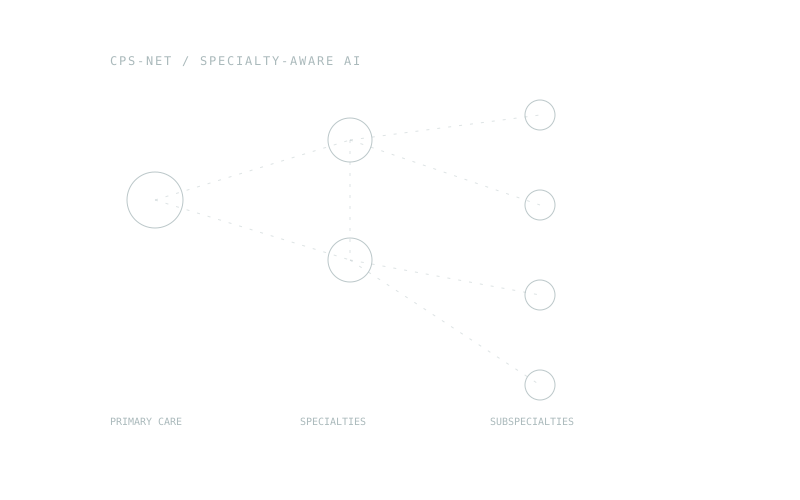 Conceptual schematic · 01
Multi-agent clinical AI · 2026
CPS-Net: learning to consult across specialties
Specialty-trained transformers and collaborating language-model agents predict disease through an auditable referral workflow.
Journal of Medical Systems · Research article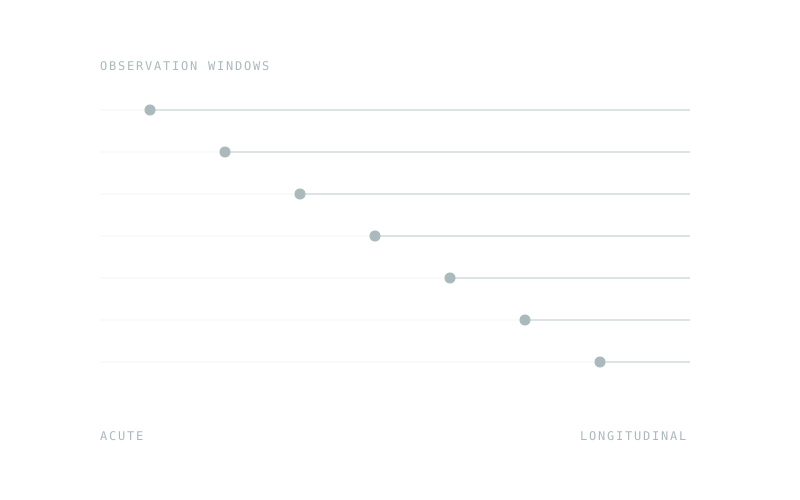 Conceptual schematic · 02
Explainable AI · 2026
Understanding how fall risk changes over time
Comparing clinical predictors across seven time horizons to distinguish acute triggers from longer-term vulnerability.
GeroScience · Research article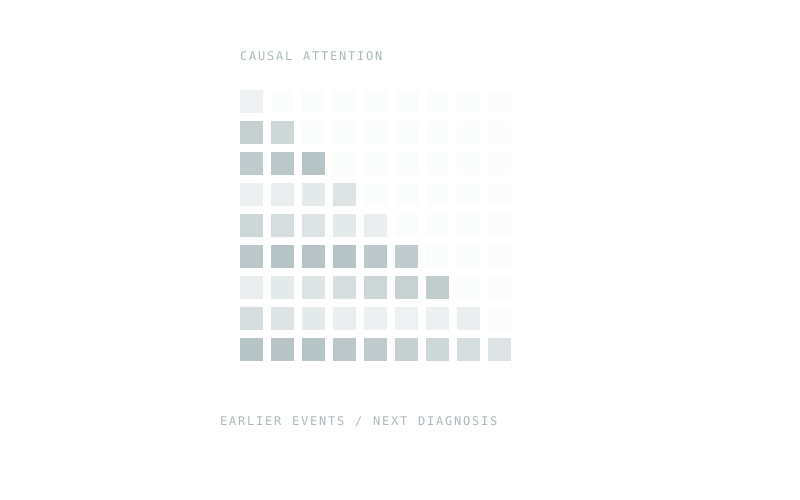 Conceptual schematic · 03
Disease trajectories · 2026
Learning the sequence of disease
A generative, interpretable transformer framework for modeling sequences of diagnoses in health records.
Neural Computing and Applications · Research article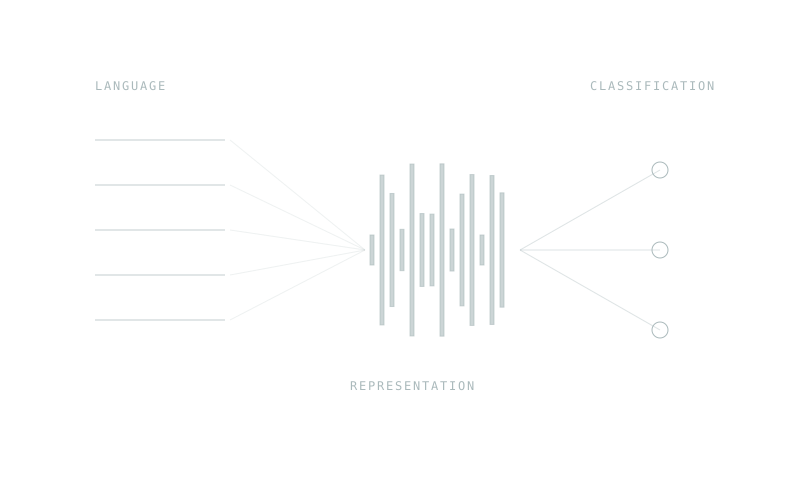 Conceptual schematic · 04
Clinical language models · 2025
Language models for cognitive impairment detection
LLMCARE explores transformer models and synthetic language data for early detection of cognitive impairment.
Frontiers in Artificial Intelligence · Research article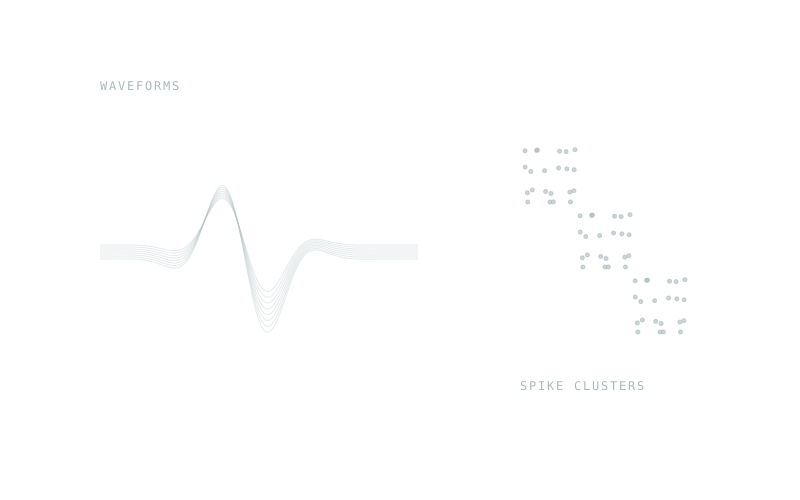 Conceptual schematic · 05
Neural signal processing · 2025
MCWs — making sense of human neural recordings
A spike-sorting framework designed around the challenges of human intracerebral recordings in hospital settings.
bioRxiv · PreprintOur study on the safety of biologics and Janus kinase inhibitors in IBD patients with low cardiovascular risk is published in Crohn’s & Colitis 360. Read the paper.
Our paper “User-Centered Explainable AI in Healthcare: A Literature Review” has been submitted to ACM Computing Surveys. 📝
Our paper “Explainable AI reveals temporal risk pathways in fall prediction” was published in GeroScience! Read it here. 🎉
04 / Get in touch
Let’s ask the
next question.
For collaborations in medical AI, clinical prediction, and biomedical informatics.